


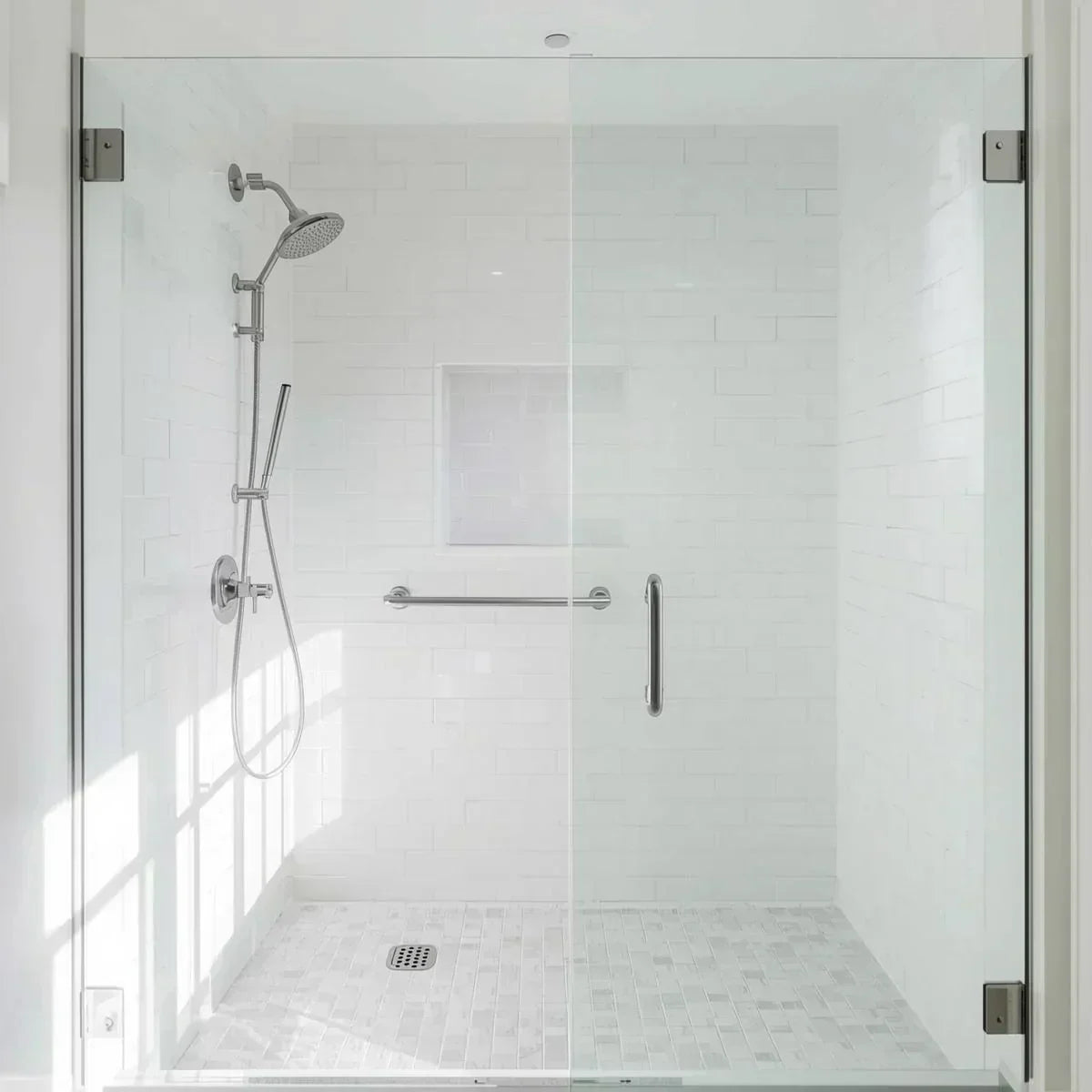
Cleaning your shower can often spark a bit of debate, especially when it comes to the order of steps. Everyone seems to have their own method—some people scrub with a shower cleaner first and rinse afterward, while others prefer to hose it down before applying any cleaner. But what really counts as the best approach depends on the type of shower you have. If you have a thermostatic shower, for example, it’s important to be careful around the controls so that harsh chemicals don’t seep inside and damage the internal cartridge. One part almost everyone struggles with is the shower head, which can get particularly grimy. Let’s start by exploring the best way to tackle that buildup.
How to clean your shower: first steps
Firstly, you may wonder how to tackle a dirty shower head. Soaking it in white vinegar inside a plastic ziplock bag for an hour can help remove limescale easily. Make sure the vinegar covers the shower head completely. After soaking, rinse with water and scrub any remaining limescale with a toothbrush. Other effective options include lemon juice, shower head descalers, or certain household cleaners, but avoid bleach. This technique isn’t safe for showers made of marble or natural stone.

Knowing how to remove soap scum from your shower doors can be a bit frustrating, but here’s a good way to get started. Clean the shower screen from top to bottom, and use a microfibre cloth to wipe away any excess water. For best results, apply lemon juice or baking soda onto a damp sponge and let it sit for a few minutes if there are stubborn stains.
To keep your shower doors looking sparkling, squeegee the glass after every shower. You can also make a simple daily cleaning spray by mixing one cup of water with half a cup of vinegar in a spray bottle. Using a water-repellent spray or an all-purpose bathroom cleaner once a month will help prevent hard water stains from building up. If you have a shower curtain instead of a screen, it should be washed monthly, and a melamine sponge works well to remove any grime.

The best way to clean marble and stone showers
For marble and stone showers, it’s best to clean them using a mild soap solution and make sure to dry the surfaces after each use to keep them in good condition. If you don’t always have time to dry the shower, you can use a mixture of baking soda and water made into a paste to help remove any mould that appears.

How to clean grout inside a ceramic tile shower
Mildew can quickly build up in the grout lines of your shower, so regular cleaning is key to preventing those dark, unsightly streaks. It’s best to clean the grout first before tackling the rest of your shower with a standard multi-purpose cleaner. Because the cleaning solution is quite strong, make sure the bathroom is well ventilated by opening the windows. Set aside at least 20 minutes for the job, as the solution needs around 10 minutes to soak into the grout before rinsing.

Wear rubber gloves and use a sponge to apply a mixture of one part chlorine bleach to two parts water directly onto the grout. The longer you let it sit, the less scrubbing you’ll need to do later. Even if you prefer a commercial cleaner, allowing it to soak will help loosen stubborn grime. An old toothbrush works perfectly for scrubbing the grout, but avoid using coarse brushes that could scratch or damage your tiles.

How to clean smaller areas of your shower
Have you ever spotted rusty rings forming under a soap bottle that hasn’t been moved in a while? An easy way to remove them is by using a mixture of lemon juice and baking soda. Just remember — never use bleach on rust stains, as it can actually make them set in even deeper. If the rust is older and tougher to remove, you can try a stronger commercial cleaner. For smaller rust spots on shower doors, a simple paste made from one teaspoon of lemon juice and two teaspoons of salt works wonders.
Don’t forget to clean behind smaller shower accessories like caddies, soap dishes, and bathmats, as these hidden areas are common spots for mould and scum buildup. It’s also important to clean your shower tracks regularly — doing so will save you from the hassle of a difficult deep clean later on.
Long lasting methods for a cleaner shower
Finally, besides the usual daily rinsing and drying of your shower, there are a few extra things you can do to reduce how often you need to deep clean. If your bathroom doesn’t have much ventilation, a dehumidifier could work wonders for keeping the mould away. To maintain shower cleanliness for longer, consider having a water softener installed if you have hard water in your area. Overall, regular cleaning and choosing the correct cleaning method for your type of shower, will ensure that you keep your shower sparkling clean!

Looking for a shower set that’s truly easy to clean? Choose Chrome, Stainless Steel, or ABS, check out our shower collection on our online store