

Reviewed by Bathroom Republic's Team
Quick answer: To adjust a thermostatic shower valve, run the shower until its temperature settles, check the water with a suitable thermometer and compare it with the control marking. If calibration is needed, follow the valve's own instructions to remove the handle and make small adjustments. The exact method and turning direction vary by model.
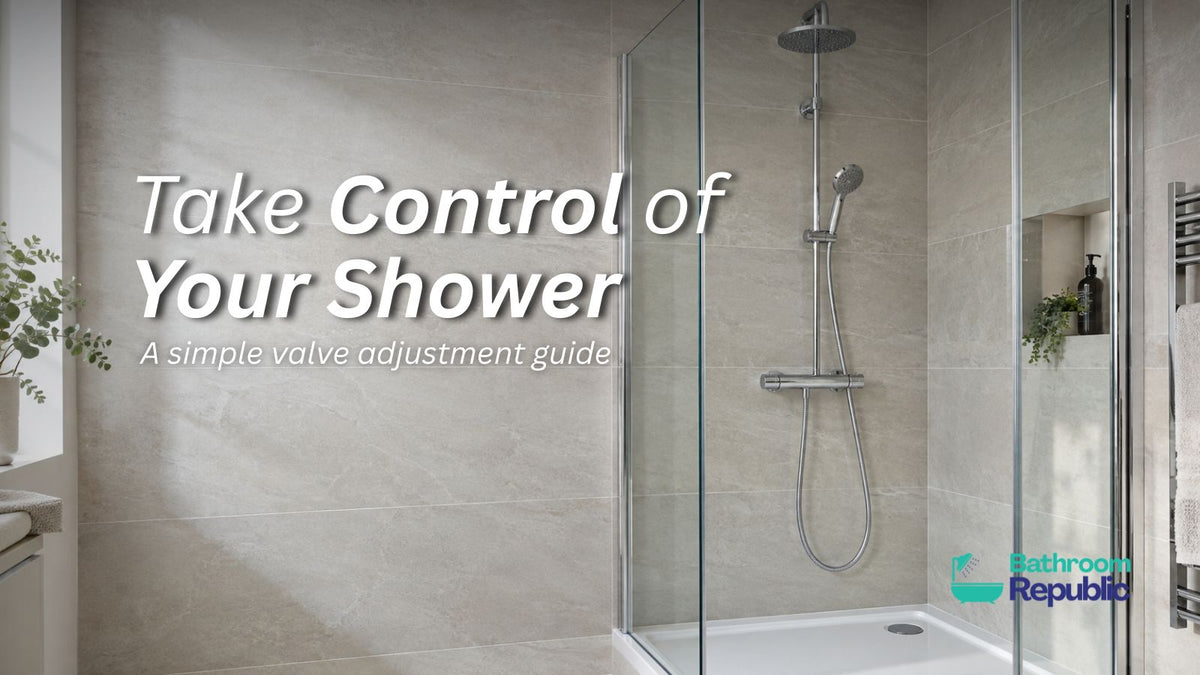
How to Adjust a Thermostatic Shower Valve Safely
A thermostatic shower valve can sometimes need adjusting when the temperature shown on its control no longer matches the water coming from the shower. This is known as shower valve calibration.
Before changing anything, find the instructions for your exact valve. Handles, cartridges and temperature stops do not all work in the same way. A simple calibration may correct a small difference, but it will not repair a leak, blocked filter, failing cartridge or problem with the hot and cold water supplies.
If you are comparing controls for a new installation, explore Bathroom Republic's shower valves.

Jump to a section
What Does a Thermostatic Shower Valve Do?
A thermostatic shower valve mixes the incoming hot and cold water to produce the temperature selected on its control.
Inside the valve is a thermostatic cartridge. It responds to changes in the incoming water and adjusts the mix. This helps keep the outlet temperature steadier than a simple manual mixer when the supplies change within the valve's operating limits.
The temperature control selects the desired mix. A separate flow control may turn the shower on and adjust the amount of water. The exact arrangement depends on whether you have a bar valve, an exposed valve or concealed controls.
Thermostatic operation cannot correct every supply problem. The valve still needs suitable hot and cold water supplies, clean filters and a working cartridge.
Adjustment, Calibration and Temperature Stops: What Is the Difference?
Normal adjustment, calibration and changing a temperature stop are three different actions.
- Normal temperature adjustment means turning the handle during ordinary shower use.
- Shower valve calibration means aligning the control marking with the actual water temperature.
- Temperature-stop adjustment changes how far the control can turn towards the hotter setting.
Many thermostatic controls have a marked safety stop. A temperature override may require the user to press a button before selecting a hotter setting. The marked temperature and adjustment method vary, so never assume that every valve uses the same limit.
Do not move or remove a temperature stop simply to make the shower hotter. First check the water temperature and the product instructions. The stop is an important part of the valve's temperature-control design.
What Should You Check Before Adjusting the Valve?
Before calibrating the valve, check that the shower and water supplies are working normally.
- Find the correct instructions. Use the model number or purchase information to identify the exact valve.
- Let the hot-water supply reach its normal temperature. A cold cylinder or boiler can give a misleading test.
- Check other taps. Confirm that both hot and cold water are available elsewhere in the property.
- Use the shower at its normal flow. A very low flow may not give a useful test on some systems.
- Allow the temperature to settle. Do not measure it immediately after turning on the shower.
- Use a suitable thermometer. Do not judge potentially hot water with your hand alone.
- Look for leaks. A leaking valve needs diagnosis rather than simple calibration.
Keep children and anyone who may be sensitive to hot water away while testing the shower.

How to Adjust a Thermostatic Shower Valve
Most thermostatic shower valves are calibrated by checking the outlet temperature, removing the temperature handle and making a small adjustment to the calibration control. The exact process varies by model.
Step 1: Find the Valve Instructions
Confirm the model before removing any part. The fixing screw may be beneath a cap, behind the handle or in another position. The instructions should also show the correct calibration temperature and adjustment direction.
Step 2: Run the Shower
Turn the shower on at its normal flow. Move the temperature handle to the marked stop or calibration position shown in the instructions. Allow the temperature to settle.
Step 3: Measure the Water Temperature
Hold a suitable thermometer in the flowing water. Keep it clear of the shower tray or enclosure surface, as these may affect the reading.
If the measured temperature matches the setting within the tolerance stated in the product instructions, calibration may not be needed.
Step 4: Remove the Temperature Handle
Turn off or isolate the shower as directed by the manufacturer. Carefully remove the decorative cap, retaining screw and temperature handle.
Do not force the handle. Stop if it will not come away normally or if removing it would disturb sealed parts, pipe connections or the tiled wall.
Step 5: Make a Small Calibration Adjustment
Use the method shown in the instructions to move the calibration spindle or control by a very small amount. Some models must be tested while water is flowing. Others have different procedures.
Do not assume clockwise always means hotter. The direction can vary. Make one small change at a time and measure the water again after it settles.
Step 6: Refit and Align the Handle
When the measured temperature matches the specified calibration point, refit the handle so its marking aligns with the correct position. Refit the screw and cap without overtightening them.
Step 7: Test the Full Control
Run the shower again. Check the normal setting, the temperature stop and the cooler range. Confirm that the control moves smoothly and that no water is leaking around the valve.

How Do You Check the Shower Valve Temperature Stop?
The temperature stop should be checked by moving the control to its marked stopping point and measuring the resulting water temperature.
If the temperature does not match the value specified for the valve, calibration may be required. Do not change the maximum stop until the basic calibration has been checked.
Some controls allow a hotter setting only after an override button is pressed. Test this feature carefully after calibration. If the handle moves past the stop without using the override, refit it correctly or ask an installer to inspect it.
Why Is the Shower Still Too Hot, Too Cold or Inconsistent?
A temperature problem is not always caused by poor calibration. Check the symptom before changing the valve again.
| Symptom | Possible Check | Next Step |
|---|---|---|
| Always too hot | Calibration, cold supply and temperature-stop position | Stop using it if a safe temperature cannot be selected |
| Always too cold | Hot-water supply, calibration and inlet restrictions | Confirm hot water is available elsewhere |
| Temperature changes | Supply changes, blocked filters or cartridge condition | Arrange diagnosis if the problem continues |
| Control does not respond | Stiff handle, scale or cartridge fault | Do not force the control |
| Valve leaks | Seals, connections or internal components | Isolate it where safe and contact an installer |
Limescale, debris or an ageing thermostatic cartridge can affect movement and temperature control. Calibration changes the control position; it does not repair damaged parts.
Manual vs Thermostatic Shower Controls
A manual mixer changes the hot and cold mix according to the handle position. It does not regulate the mixture in the same way as a thermostatic cartridge.
A thermostatic valve responds to changes in its incoming supplies and adjusts the mixture within its operating range. It may also include a marked temperature stop or override control.
Before attempting calibration, confirm that your valve is thermostatic. The product description, instructions or model information should make this clear.
Bathroom Republic offers bar shower valves, surface-mounted exposed shower valves and recessed concealed shower valves. Always check the individual specification because features differ by model.
When Is Shower Valve Adjustment Not Enough?
Adjustment is not enough when the problem comes from the water supply, filter, cartridge, seals, pipework or an incompatible installation.
Contact an experienced installer if:
- The shower remains dangerously hot
- The temperature changes sharply during use
- The control is seized or difficult to turn
- The valve or wall connection leaks
- Only hot or only cold water reaches the shower
- The cartridge must be removed
- A concealed valve requires access behind the finished wall
- The valve needs replacing
Do not buy a replacement cartridge by appearance alone. The cartridge must match the exact valve. If replacing the full system is more practical, compare compatible shower sets and suitable shower accessories.

Summary: Adjust Carefully and Test Each Change
A thermostatic shower valve can be recalibrated when its control marking does not match the measured outlet temperature. Start by checking the water supplies, finding the correct instructions and testing the temperature with a suitable thermometer.
Make only small adjustments and never guess the turning direction. If the valve leaks, remains dangerously hot, does not respond or needs internal repair, stop adjusting it and ask an experienced installer to diagnose the problem.
Thermostatic Shower Valve Adjustment Checklist
Thermostatic Shower Valve FAQs
Can every thermostatic shower valve be adjusted?
Many thermostatic valves can be calibrated, but the method varies. Some use a removable handle and calibration spindle. Others have a different control arrangement. Find the instructions for the exact model before removing anything or changing the temperature stop.
What is thermostatic shower valve calibration?
Calibration aligns the temperature shown on the shower control with the water coming from the outlet. It normally involves measuring the water and making a small adjustment behind the temperature handle. Calibration does not repair a faulty cartridge or water-supply problem.
Why is my thermostatic shower too hot?
The valve may be incorrectly calibrated, the temperature stop may be fitted wrongly or the cold supply may be restricted. Stop using the shower if a safe temperature cannot be selected. An installer should diagnose persistent or sudden overheating.
Why is my thermostatic shower not hot enough?
First check whether the property's hot-water supply has reached its normal temperature. Incorrect calibration, restricted inlets or a cartridge problem may also limit the outlet temperature. Do not move the maximum stop until the cause has been checked.
Which way should I turn the calibration spindle?
Use the direction shown in the valve's own instructions. Do not assume that clockwise always makes the water hotter or colder. Designs differ. Make a very small change, allow the temperature to settle and measure it again.
Does the shower valve temperature stop need changing?
Not necessarily. Check the basic calibration first. The stop limits how far the temperature control moves and may include an override button. Change it only when the manufacturer's instructions explain how and why it should be adjusted.
Can limescale affect a thermostatic shower valve?
Limescale or debris may restrict filters or affect moving components, depending on the valve and water supply. Calibration will not remove a blockage or repair a damaged cartridge. Follow the correct maintenance instructions or ask an installer to inspect it.
When should a thermostatic cartridge be replaced?
A cartridge may need professional inspection when the temperature remains unstable, the control is seized or correct calibration does not solve the problem. Replacement cartridges must match the exact valve. Do not choose one by appearance alone.
Comparing Shower Valve Options?
Check the valve type, water-system requirements, outlet configuration and product instructions before choosing.
Browse Shower ValvesHave you shopped with Bathroom Republic?
We would love to hear about your experience. Your feedback helps other customers make informed choices.
Review Bathroom Republic on TrustpilotAuthor: Bathroom Republic's Team