

How to Clean a Shower: Remove Soap Scum, Limescale and Grime
Estimated reading time: 10 minutes
Regular shower cleaning helps prevent soap residue, limescale and everyday grime from becoming difficult to remove. The safest general approach is to start with warm soapy water, a soft cloth and the care instructions supplied with your shower products.
Different surfaces need different treatment. A cleaner that is suitable for ordinary shower glass may damage natural stone, acrylic, coloured metal finishes or protective coatings. Always check the product instructions, test an unfamiliar cleaner on a small concealed area and avoid abrasive pads that could scratch the surface.
This guide explains how to clean the main parts of a shower safely, deal with common deposits and create a manageable routine that reduces the need for aggressive deep cleaning.

What Is Building Up in Your Shower?
Identifying the type of residue helps you choose an appropriate cleaning method rather than applying a stronger product unnecessarily.
Soap Scum
Soap scum is usually a cloudy or slightly greasy film left by soap, body products and minerals in the water. It commonly appears on shower glass, tiles, trays and around fittings.
Limescale
Limescale is a hard, chalky mineral deposit associated with hard water. It often develops around shower-head nozzles, taps, frames and areas where water droplets are repeatedly allowed to dry.
Everyday Grime
Dust, body oils, shampoo and other residues can collect in shower-door tracks, corners, around seals and inside removable waste components.
Mould and Damaged Sealant
Dark marks around grout or sealant may indicate surface mould, trapped dirt or deterioration. If marks remain after suitable cleaning, the sealant may need professional replacement. Recurring problems can also indicate poor ventilation, persistent moisture or a leak that needs investigation.
Shower-Cleaning Safety Rules
Before starting, read the care instructions for the enclosure, tray, shower fittings, wall panels, tiles and any cleaning product you intend to use.
- Never mix cleaning products. Combining bleach with acids, ammonia or other cleaners can release dangerous fumes.
- Ventilate the bathroom while cleaning.
- Follow the cleaner’s label, including any glove or eye-protection instructions.
- Keep products in their original labelled containers.
- Keep cleaning products away from children and pets.
- Rinse one cleaner away completely before considering a different product.
- Test unfamiliar products on a small concealed area first.
- Do not use steel wool, harsh scourers or sharp tools on shower surfaces.
- Stop using a product if it affects the colour, gloss or texture of the surface.
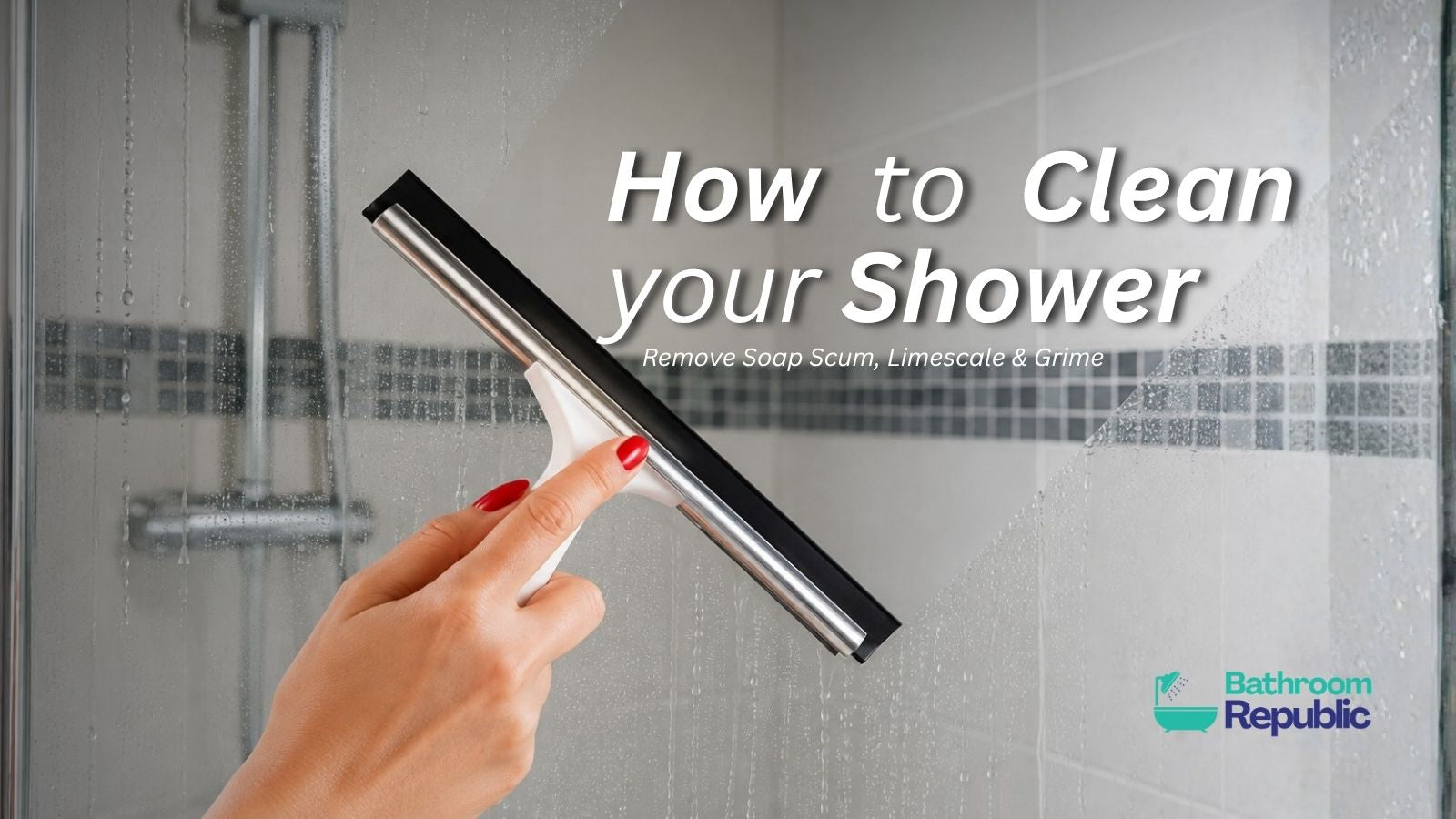
For routine care, Bathroom Republic generally recommends warm soapy water and a soft cloth. In hard-water areas, drying shower glass with a squeegee after use can help reduce visible water marks.
What You Need to Clean a Shower
- A bucket of warm water
- A mild soap or cleaner approved for the surface
- Soft microfibre cloths
- A non-scratch sponge
- A soft brush for tracks and accessible corners
- A shower-glass squeegee
- A dry, lint-free cloth
- Protective gloves where required by the cleaner’s label
- A compatible limescale or mould cleaner only where necessary
Remove shampoo bottles, soap dishes and other loose items before cleaning. Bathroom Republic’s shower baskets and caddies can help keep products raised from the tray or floor, making the surrounding surfaces easier to reach.
How to Clean a Shower Step by Step
1. Remove Loose Items and Inspect the Shower
Take bottles, mats and removable accessories out of the enclosure. Look for damaged seals, loose handles, poorly running doors, leaks or blocked drainage before applying any cleaner.
Cleaning will not repair a worn seal or damaged component. If a part appears unsuitable for continued use, identify the enclosure and confirm replacement compatibility before ordering.
2. Rinse Away Loose Residue
Rinse compatible surfaces with warm water to remove loose hair, soap and dirt. Avoid excessively hot water where the product instructions advise against it.
Work from the upper surfaces downwards so loosened residue does not fall onto areas you have already cleaned.
3. Clean the Shower Glass
Apply warm soapy water with a soft cloth or non-scratch sponge. Gently work across the glass, paying attention to the lower sections where droplets and soap residue often collect.
Rinse thoroughly, remove excess water with a clean squeegee and dry the edges with a lint-free cloth. Drying is important because allowing mineral-rich droplets to evaporate can leave visible marks.
If soap scum or limescale remains, use a glass cleaner or descaler only when it is approved for the enclosure and any protective glass coating. Follow the label carefully and prevent the cleaner from sitting on surrounding metalwork or seals unless it is also suitable for those materials.
If existing glass or hardware is damaged beyond practical maintenance, compare Bathroom Republic’s current shower enclosure collection and check every measurement before considering replacement.

4. Clean the Shower Tray
Remove loose hair and rinse the tray. Clean it using warm soapy water and a soft cloth or non-scratch sponge unless its care guide specifies another method.
Acrylic, resin and stone-effect trays can have different cleaning restrictions. Avoid abrasive powders, hard brushes and unapproved acidic or alkaline cleaners. Rinse away all cleaning residue because a slippery film could create a safety risk.
Dry the tray and inspect it for cracks, movement or failed sealant. Cleaning cannot correct installation movement or water escaping around the edges, so ask a qualified installer to investigate those problems.
5. Clean Tiles, Wall Panels and Grout
Start with warm water and a mild cleaner approved for the surface. Wipe from the top down, rinse thoroughly and dry where practical.
Do not assume an acidic limescale cleaner is suitable for every wall finish. Natural stone, certain grouts, decorative panels and specialist coatings may be damaged by acids or strong chemicals.
Use a soft brush around grout lines only when the grout and surface can tolerate it. Avoid aggressive scrubbing that could erode the grout or scratch adjacent tiles and panels.
6. Clean Frames, Handles and Coloured Finishes
Chrome, matte black, brushed brass and other visible finishes may have different care requirements. A soft cloth with warm soapy water is generally a sensible starting point, followed by a clean-water rinse and careful drying.
Do not leave bathroom cleaner or limescale remover sitting on metal surfaces unless the manufacturer specifically approves it. Avoid abrasive cloths and repeated hard rubbing, which can affect the finish.
Bathroom Republic’s shower enclosure accessories and fixings include selected handles, seals, rollers and other components. Match all replacement parts by dimensions and compatibility rather than appearance alone.
7. Clean the Shower Head and Nozzles
Wipe the shower head and arm with warm soapy water and a soft cloth. Where the nozzles are flexible, gentle wiping may help dislodge loose deposits, but follow the shower’s care instructions.
Do not automatically soak a shower head in vinegar or descaler. Acids and prolonged immersion may affect plating, seals or internal components. If descaling is permitted, use the approved method and product concentration stated by the manufacturer.
Do not dismantle concealed shower components or valves for routine cleaning. Contact a qualified professional where there is reduced flow, a leak or a fault that surface cleaning does not resolve.
Bathroom Republic’s shower heads and arms and wider shower accessories collections provide options for upgrades and compatible replacement projects.

8. Clean the Shower Waste
Remove visible hair and residue from the waste cover. If the waste has a removable cleaning component, follow its instructions and note the correct assembly before removing anything.
Wash removable parts with warm soapy water, rinse them and refit them securely. Do not force components that are fixed or difficult to remove.
A slow drain that remains blocked after accessible debris is removed may require a plumber. Avoid repeatedly combining or alternating chemical drain cleaners, and never mix them with other cleaning products.
Bathroom Republic’s shower tray wastes include replacement options for compatible installation projects. Confirm the outlet size, tray requirements and plumbing arrangement before purchasing.
9. Clean Door Tracks, Rollers and Seals
Use a soft cloth or brush to lift residue from accessible tracks and around seals. Rinse gently without directing excessive water outside the enclosure.
Clean flexible seals carefully to avoid pulling them away from the glass. If a seal is split, permanently discoloured, loose or no longer containing water, replacement may be more appropriate than repeated aggressive cleaning.
Visit Bathroom Republic’s shower enclosure replacement parts collection for selected seals, rollers and fittings. Measure the glass thickness, seal profile, gap and length carefully, and check whether the part is specific to a particular enclosure.
10. Rinse, Dry and Ventilate
Rinse away all cleaning residue using clean water. Use a squeegee on the glass and dry metal edges, handles and accessible corners with a soft lint-free cloth.
Ventilate the bathroom afterwards. Regular airflow and surface drying help reduce the persistent moisture that contributes to water marks and mould growth.
How to Remove Stubborn Soap Scum
Begin with warm soapy water and allow the surface to remain wet briefly rather than immediately scrubbing harder. Use a soft, non-scratch sponge to loosen the residue, then rinse and dry.
If the deposit remains, select a proprietary soap-scum cleaner approved for the exact surface. Follow the label’s application time and never leave the product on longer in the hope of achieving a stronger result.
Repeat a gentle treatment where permitted rather than using a metal scraper, abrasive powder or hard scouring pad.
How to Remove Limescale Safely
Use a limescale remover only when the shower manufacturer and cleaner label confirm that it is suitable for the affected material and finish. Protect neighbouring surfaces that may not tolerate the product.
Acidic products can damage natural stone, some grouts, metal finishes and specialist coatings. Do not assume that vinegar is automatically safer simply because it is a household product.
After treatment, rinse the area thoroughly and dry it. Never apply bleach, an alkaline cleaner or another chemical over an acidic product. All traces of the first cleaner must be removed, and products should never be mixed.
How to Deal with Mould Around the Shower
Use a mould cleaner only when it is suitable for the relevant grout, sealant, frame or wall surface. Ventilate the room, follow the label and use any specified protective equipment.
Do not mix mould treatment with limescale remover, bleach or any other cleaning product. If changing products, rinse the surface thoroughly first.
Persistent mould inside damaged sealant may not be removable through surface cleaning. Ask a qualified installer to replace failed sealant and investigate ventilation, leaks or water escaping from the enclosure.
How to Keep a Shower Cleaner for Longer
- Use a squeegee on shower glass after use.
- Dry visible metal edges and fittings in hard-water areas.
- Rinse away shampoo and soap residue before it dries.
- Keep bottles inside a suitable basket or caddy rather than on the tray.
- Remove hair from the accessible waste area regularly.
- Ventilate the room during and after showering.
- Deal with leaks, failed seals and slow drainage promptly.
- Use mild routine cleaning rather than waiting for heavy build-up.

The Bottom Line
The safest way to clean most showers is to begin gently. Warm soapy water, soft cleaning tools, thorough rinsing and careful drying can manage much of the everyday residue without exposing surfaces to unnecessary abrasion or strong chemicals.
For stubborn soap scum, limescale or mould, use a purpose-made cleaner only after checking that it is compatible with the surface. Follow the label, ventilate the room and never mix cleaning products. If the problem involves damaged sealant, leaking components, poor drainage or a persistent fault, cleaning alone is unlikely to provide a lasting solution.
Shower-Cleaning Checklist
- Read the product-care and cleaner instructions.
- Ventilate the bathroom before starting.
- Wear any protective equipment required by the label.
- Never mix cleaning products.
- Remove loose items and inspect for damage.
- Start with warm soapy water and a soft cloth.
- Clean from the upper surfaces downwards.
- Use only non-scratch cleaning tools.
- Check compatibility before using limescale or mould cleaner.
- Clean accessible tracks, seals and waste components gently.
- Rinse all surfaces thoroughly.
- Squeegee the glass and dry visible fittings.
- Replace damaged seals with correctly matched components.
- Consult a professional about leaks, faults or persistent drainage problems.
Frequently Asked Questions
What is the safest general way to clean a shower?
Begin with warm soapy water, a soft cloth and the care instructions supplied with the product. Rinse thoroughly and dry the surface. Use stronger cleaners only when they are confirmed as compatible.
Can I use vinegar on shower glass?
Only if the enclosure manufacturer confirms that acidic cleaners are suitable for the glass, its protective coating and all nearby finishes. Vinegar can damage some materials and should never be mixed with bleach or other cleaners.
Can bleach and limescale remover be used together?
No. Never mix bleach with limescale remover, acids, ammonia or other cleaning products. Dangerous fumes can be released. Follow the label and rinse one product away completely before considering another.
How can I prevent water marks on shower glass?
Use a clean squeegee after showering and dry the edges with a lint-free cloth. This removes droplets before they evaporate and leave visible mineral deposits.
How do I clean matte black or brushed brass shower fittings?
Follow the product’s care instructions. A soft cloth with warm soapy water is generally an appropriate starting point, followed by rinsing and careful drying. Avoid abrasive tools and unapproved limescale removers.
Should I soak my shower head in vinegar?
Not unless the manufacturer specifically permits that method. Prolonged exposure to acid or immersion can affect plating, seals and internal components. Use the approved descaling procedure for the particular shower head.
When should a shower-door seal be replaced?
Replacement may be appropriate when the seal is split, loose, permanently distorted or no longer containing water. Match the replacement to the glass thickness, gap, profile and enclosure requirements.
How often should a shower be cleaned?
The appropriate routine depends on how frequently the shower is used and the local water hardness. Squeegeeing and rinsing after use, combined with regular mild cleaning, usually makes deep cleaning easier.
Maintain or Refresh Your Shower
Regular care can keep an enclosure, tray and shower fittings easier to maintain. When a seal, roller, waste or accessory needs replacing, identify the existing dimensions and compatibility before selecting a new component.
Explore Bathroom Republic’s shower accessories and shower enclosure parts for maintenance and bathroom-update projects.
If Bathroom Republic has helped with your bathroom project, you can share your experience in a Trustpilot review.
Author: Bathroom Republic's Team