

Reviewed by Bathroom Republic's Team
Quick answer: A bidet douche (also called a bidet spray or shattaf) is a handheld spray beside your toilet for personal cleansing — no extra floor space needed. The main thing to get right isn't the finish, it's UK backflow protection, which Bathroom Republic recommends confirming with a qualified installer before you buy.
Bidet Douches and Bidet Sprays: A Complete UK Buying Guide
Estimated reading time: 8 minutes
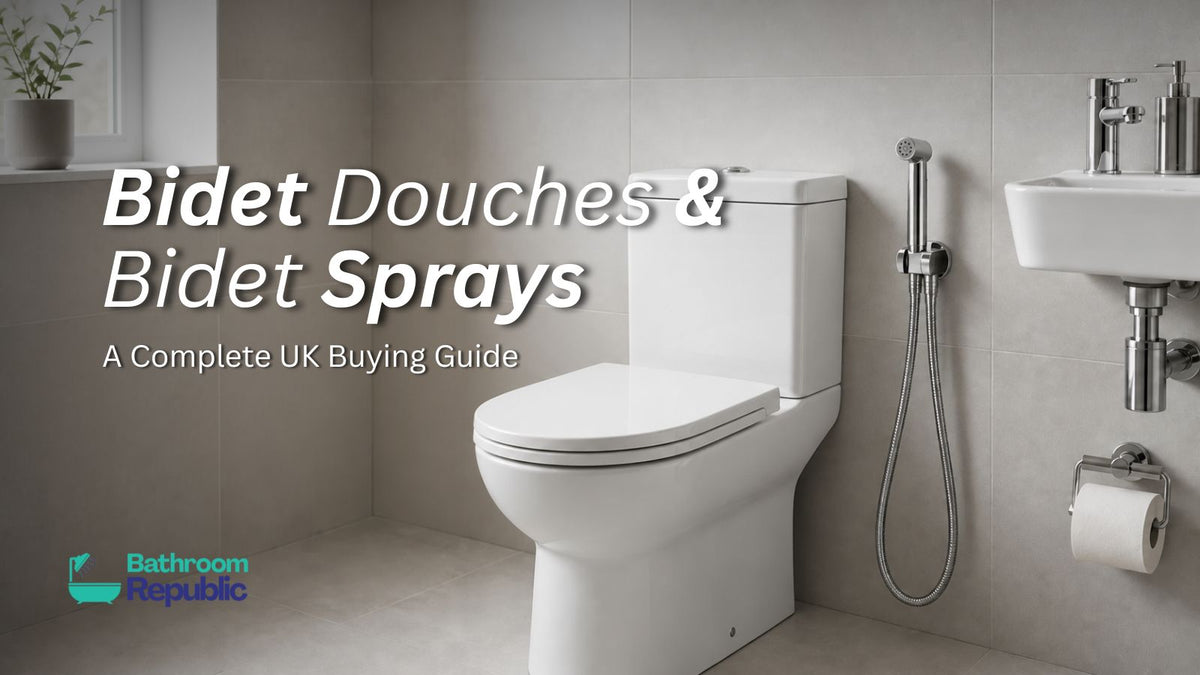
A bidet douche is a compact handheld spray positioned beside a toilet. Also known as a bidet spray, shattaf or handheld bidet shower, it provides a directed stream of water for personal cleansing without requiring the floor space of a separate ceramic bidet.
Although the basic idea is straightforward, choosing and installing a bidet spray in the UK requires more thought than simply connecting a hose to the nearest water supply. You need to consider water temperature, pressure, hose reach, shut-off control, backflow protection and the layout around your toilet.
This guide explains the main types available, how their components differ and what to discuss with a suitably qualified installer before purchasing.

What Is a Bidet Douche?
A bidet douche consists of a small spray handset connected to a flexible hose. The handset normally sits in a wall-mounted holder within comfortable reach of the toilet. A trigger, lever or thumb-operated control releases water while the spray is in use.
Depending on the selected kit, the package may contain:
- A handheld spray head
- A flexible hose
- A wall bracket or handset holder
- A shut-off or flow-control valve
- A diverter or connection fitting
- A thermostatic mixing valve on suitable mixed-water models
- A fixing plate or wall outlet on selected installations
Contents differ between products, so never assume every kit contains all the components needed for a compliant installation. Browse Bathroom Republic's current bidet douches and handheld sprays to compare available kit configurations and finishes.
Why Consider a Handheld Bidet Spray?
Compact Personal-Cleansing Option
A handheld spray is installed beside the WC rather than occupying a separate space on the floor. This can make it an attractive option for an en-suite, cloakroom or bathroom where there is not enough room for a conventional standalone bidet.
Controlled, Directed Water Flow
The user holds and positions the handset, allowing the spray to be directed as required. Trigger-operated designs also allow the water to be released only while the control is pressed. The precise spray pattern and operating method vary between models.
A Choice of Bathroom Finishes
Bidet douches are available in finishes such as chrome, matt black and brushed brass. Coordinating the spray with nearby taps, flush controls and accessories can make it feel like a planned part of the bathroom rather than a later addition.
A bidet spray may also assist some users with their personal-care routine, but individual mobility, grip and balance requirements differ. Anyone selecting bathroom equipment for accessibility should consider professional advice and explore suitable bathroom accessories and fittings as part of the wider layout.
Cold-Water and Thermostatic Bidet Douches Compared
Cold-Water Bidet Sprays
A cold-water bidet douche uses a suitable cold-water supply. It is generally the simpler product type, although the final installation must still satisfy the applicable water fittings requirements and include appropriate backflow protection.
This option may suit users who are comfortable with an unheated water supply and want a relatively uncomplicated operating arrangement. The available water pressure must remain suitable for the selected product and comfortable use.
Thermostatic Bidet Sprays
A thermostatic configuration blends hot and cold water to provide a controlled mixed-water supply. It requires both supplies to be available and correctly installed. The installer must assess pressure compatibility, temperature control, pipe routing and backflow protection on both supplies.
A thermostatic valve controls water temperature; it should not automatically be treated as a complete backflow-prevention solution. Similarly, a trigger, diverter, isolation valve or ordinary check valve does not by itself prove that an installation meets the required level of protection.
Ask the installer to examine the complete proposed arrangement rather than considering individual components in isolation.
Understanding UK Backflow Requirements
This is one of the most important parts of planning a bidet spray. A flexible handset beside a toilet can potentially reach or come into contact with contaminated water. UK water-industry guidance therefore treats bidet showers adjacent to toilets as a high backflow risk, commonly described as Fluid Category 5.
The water supply must have a suitable form of backflow protection for the assessed risk. A simple connection to the toilet supply, a standard double-check valve or a trigger on the handset should not be assumed to provide the necessary protection.
Requirements and notification procedures can differ between England, Wales, Scotland and Northern Ireland. The local water undertaker also has responsibility for determining what protection is acceptable for a particular installation.
Before ordering or altering pipework:
- Consult a plumber familiar with current water fittings requirements
- Ask whether the proposed work must be notified
- Confirm the required Fluid Category 5 protection arrangement
- Check whether both hot and cold supplies require protection
- Do not rely on the product trigger or shut-off valve as backflow protection
- Contact the local water undertaker if the proposed arrangement is uncertain
This planning should happen before walls are closed, tiles are fitted or the final toilet position is fixed. Retrofitting the correct supply arrangement later may require more extensive plumbing work.

How to Choose the Right Bidet Spray
Check the Kit Contents
Some packages contain only the spray head, holder and hose, while others include a shut-off valve, diverter, mixer or fitting plate. Compare the supplied contents with the installation plan prepared by your plumber.
Do not purchase based only on the appearance of the handset. Connections, pipework and protective arrangements behind the visible fitting are essential parts of the completed installation.
Choose a Practical Hose Length
The hose should provide comfortable reach from the seated position without creating unnecessary loops on the floor. An excessively short hose may be awkward to use, while a poorly positioned long hose can look untidy or become trapped.
Measure from the proposed wall holder to the expected operating position. Also check that the hose cannot be damaged by the toilet seat, door or nearby furniture.
Consider the Spray Control
Trigger and thumb-operated controls can feel different in use. Look for a handset that can be operated comfortably without an awkward grip. Water pressure should be introduced gradually, particularly when using the spray for the first time.
Include an Accessible Shut-Off Control
A suitable shut-off control allows the water supply to the hose and handset to be isolated when the spray is not being used. This can reduce continuous pressure on the flexible hose and make inspection or maintenance easier.
The control should be accessible rather than hidden behind the toilet or furniture. Users should follow the operating guidance provided for the selected product and installation.
Confirm Material and Connection Details
Check the stated materials, connection sizes, hose length, pressure requirements and maximum permitted temperature on the individual product page. Do not assume that two similarly styled products have identical specifications.

Matching the Bidet Spray to Your Toilet
The holder should sit close enough to the WC for comfortable use without obstructing the toilet seat, flush control or cleaning access. Wall construction and concealed services also influence where it can be fixed safely.
When planning a complete renovation, select the toilet and bidet arrangement together. Bathroom Republic's wider toilet collection includes several WC formats, each with different pipework and access considerations.
A close-coupled toilet has a visible cistern, so the surrounding fittings and proposed connections must be considered carefully. With a back-to-wall or wall-hung arrangement, much of the plumbing may be concealed, making early coordination especially important.
If your project includes a hidden cistern, discuss access for future isolation and maintenance before selecting from the available concealed cisterns and WC frames. Essential controls should remain serviceable after tiling and finishing work is complete.
Choosing a Coordinating Finish
Chrome
Chrome is a versatile choice that coordinates naturally with a broad selection of taps, flush buttons and accessories. Its reflective surface works in traditional and contemporary rooms, although water marks may be more noticeable between cleans.
Matt Black
Matt black creates a defined contrast against white ceramics and pale tiles. It works particularly well when repeated through the basin tap, shower fittings or smaller accessories. Use cleaning products recommended for the finish and avoid abrasive pads.
Brushed Brass
Brushed brass introduces a warmer accent and can complement neutral stone, warm timber and coloured furniture. Finish tones can vary, so compare the visible products together where close coordination is important.
You can use Bathroom Republic's bathroom tap collection and toilet-roll holders to continue the chosen finish around the room without making every accessory identical.

Using and Maintaining a Bidet Douche
Begin with a low, controlled flow and keep a secure grip on the handset. Return it to the wall holder after every use and operate the separate shut-off control as directed for your installation.
Inspect the hose, handset, connections and holder regularly. Stop using the spray and isolate its supply if you notice leaking, corrosion, cracking, bulging in the hose or a change in how the trigger operates. Arrange replacement or professional inspection rather than attempting a temporary repair.
Clean the handset with a soft cloth and a mild product suitable for its finish. Avoid immersing the handset in the toilet or allowing it to rest on the floor. The nozzle should be kept clean without using harsh abrasives that could damage the surface.
Complete the area with easy-to-clean, sensibly positioned items from the basin accessories collection. Avoid placing storage or decorative objects where they obstruct the bidet hose or isolation control.
Summary: Choosing a Safe and Practical Bidet Spray
A bidet douche can provide a compact and convenient personal-cleansing option, with cold-water and thermostatic configurations available in several coordinating finishes. The right choice depends on more than colour: hose reach, operating control, water pressure, temperature and access for isolation all affect everyday use.
Most importantly, a handheld spray beside a toilet requires careful consideration of UK backflow rules. Ask a suitably qualified installer to assess the complete arrangement and confirm the requirements with the relevant water undertaker where necessary. Once the technical plan is established, you can select a bidet kit that suits both the installation and the bathroom design.
Bidet Douche Buying Checklist
Frequently Asked Questions About Bidet Douches
What is the difference between a bidet douche, bidet spray and shattaf?
These terms commonly describe the same general product: a small handheld spray connected to a flexible hose and positioned beside a toilet for personal cleansing. Product components and installation requirements can still vary.
Are handheld bidet sprays legal in the UK?
They can be installed, but the completed installation must comply with the applicable water fittings regulations or byelaws. Bidet sprays beside toilets are treated as a high backflow risk, so suitable protection is required and notification may apply. Consult a qualified installer and, where necessary, the local water undertaker.
Can I connect a bidet spray directly to my toilet supply?
Do not assume that a direct connection is acceptable. The complete arrangement needs appropriate backflow protection for the assessed risk. Ask a suitably qualified plumber to design and verify the installation before connecting the spray.
Does a bidet spray trigger prevent backflow?
No. The trigger controls the release of water but should not be treated as recognised backflow protection. A separate compliant protection arrangement must be specified for the installation.
Is a thermostatic bidet douche better than a cold-water spray?
A thermostatic model offers blended water, while a cold-water spray has a simpler supply arrangement. The better choice depends on the available pipework, pressure, installation requirements and personal preference. Thermostatic temperature control does not remove the need for suitable backflow protection.
Should the bidet douche supply be turned off after use?
Follow the operating guidance for the specific product and installation. Where a separate shut-off control is provided, isolating the handset and hose after use can prevent them from remaining continuously pressurised.
Can a bidet spray be added to an existing bathroom?
It may be possible, but the installer must assess the available water supplies, backflow protection, wall construction, hose position and maintenance access. Retrofitting can involve more work than attaching a hose to an existing connection.
How should a bidet spray hose be maintained?
Inspect the hose and its connections regularly for leaks, corrosion, cracks, kinks or bulging. Isolate the supply and arrange replacement if deterioration is found. Keep the handset in its holder and follow the manufacturer's cleaning and maintenance instructions.
Ready to explore bidet douches?
Browse Bidet DouchesHave you shopped with Bathroom Republic?
We would love to hear about your experience. Your feedback helps us improve and helps other customers make informed choices.
Review Bathroom Republic on TrustpilotAuthor: Bathroom Republic's Team