

Reviewed by Bathroom Republic's Team
Quick answer: To replace a toilet seat, identify the fixing type, remove the old fixings and measure the toilet pan before buying a new seat. Check the shape, length, width, fixing centres and hinge arrangement, then centre the compatible seat and tighten both sides gradually.
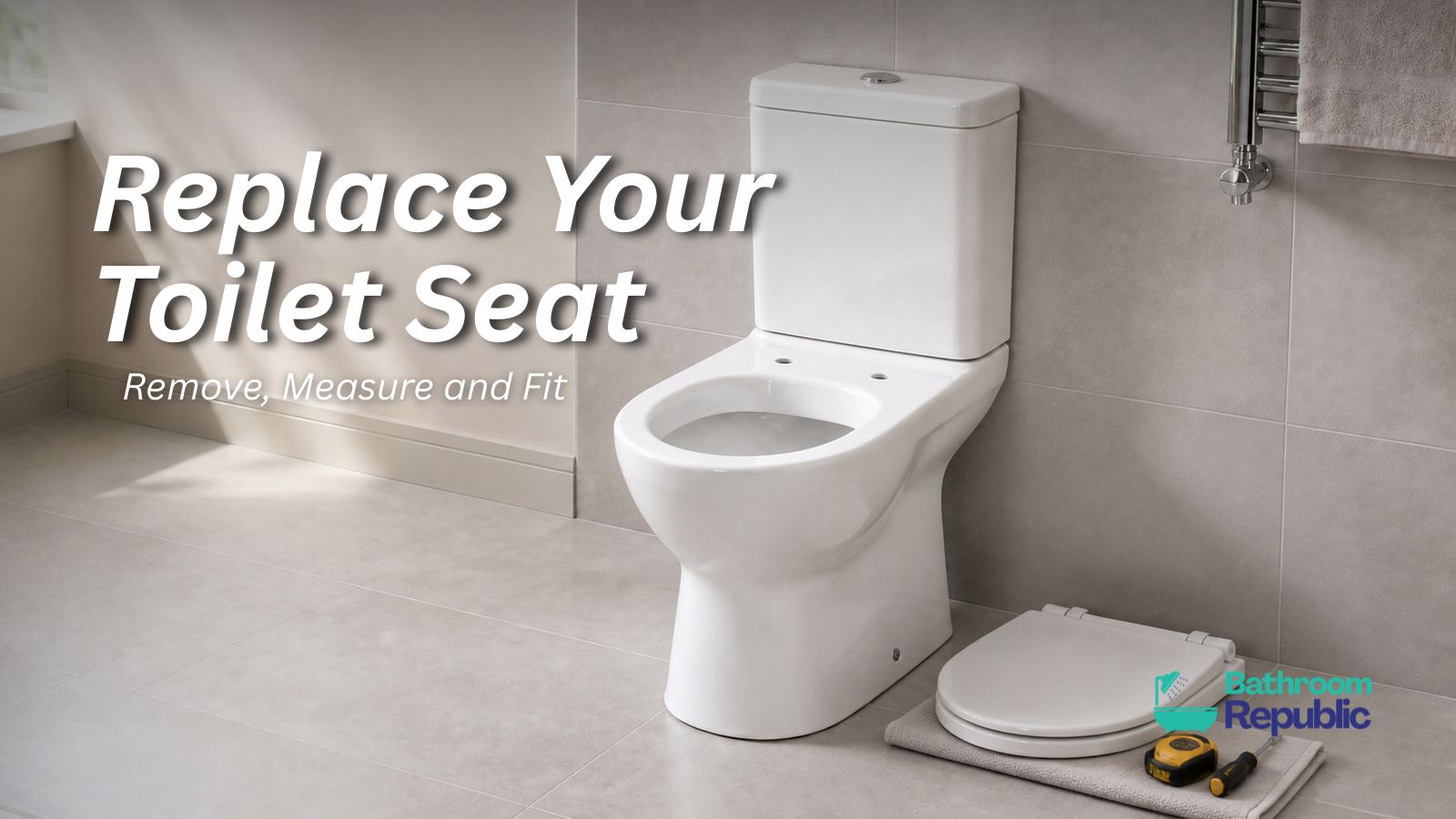
How to Replace a Toilet Seat: Remove, Measure & Fit a New Seat
Estimated reading time: 8 minutes
To replace a toilet seat, remove the old fixings, clean the toilet pan, measure the pan and fit a compatible new seat. Check the pan shape, length, width, fixing centres and fixing type before buying.
Toilet seats are not all interchangeable. A seat that looks similar may still have the wrong dimensions or hinge arrangement.
What You Need Before Replacing a Toilet Seat
Gather your tools before starting. You may need:
- A flat-head or cross-head screwdriver
- An adjustable spanner or suitable socket
- A tape measure
- A cleaning cloth
- A mild bathroom cleaner
- Protective gloves
- Your replacement toilet seat
- The manufacturer’s fitting instructions
The tools you need depend on the existing fixings. Some seats can be removed entirely from above. Others have nuts underneath the toilet pan.
Check that the new package includes the correct hinges, bolts, washers, plugs and nuts. Do not assume the old fixings will suit the new seat.

How to Remove an Old Toilet Seat
How to remove a toilet seat depends on whether it uses top-fix or bottom-fix fittings. Look at the hinges before using any tools.
1. Find the seat fixings
Open the hinge covers if they are visible. These covers may lift, slide or unclip. Underneath, you may find a screw, bolt or release button.
For bottom-fix seats, look underneath the back of the toilet pan. You may see a plastic wing nut, metal nut or threaded fixing.
2. Loosen the fixings
Use the correct screwdriver on the bolt head. If there is a nut underneath, hold it with a spanner while turning the bolt from above.
Work slowly. If a fixing is stiff, do not place heavy force on the ceramic pan. A badly corroded or damaged fixing may need specialist removal.
3. Remove the seat and hinges
Once both fixings are loose, lift away the toilet seat. Remove the hinge plates, bolts, washers and plugs unless the new manufacturer specifically says they can be reused.
Some quick-release seats lift away before the hinge plates are removed. Check for release buttons near the hinges.
4. Clean the mounting area
Dirt and limescale often collect underneath the hinges. Clean and dry the top of the pan before measuring or fitting the new seat.
A clean surface helps the new hinge pads sit flat. It also makes poor alignment easier to spot.

How to Measure for a Replacement Toilet Seat
Measure the toilet pan after removing the old seat. Measure the ceramic pan rather than relying only on the dimensions of the old seat.
Record the following measurements:
Length
Measure from the centre line of the fixing holes to the furthest front edge of the pan. Keep the tape measure straight along the centre of the toilet.
Maximum width
Measure across the widest part of the pan. Do not assume this point is exactly halfway along its length.
Fixing centres
Measure from the centre of one fixing hole to the centre of the other. This is the fixing-centre distance.
Some hinges have a limited adjustment range. The new seat’s stated range must include the fixing centres on your pan.
Pan shape
Look at the pan from directly above. Common shapes include rounded, oval, D-shaped and more angular designs. Small differences in the front curve can affect the fit.
Fixing type and hinge position
Check whether the pan needs top-fix or bottom-fix fittings. Also note whether the fixing holes are fully accessible from underneath.
Take clear photographs of the pan and fixing holes. Keep your measurements with you when comparing a replacement WC seat.
Important: toilet seats are not universally interchangeable. Matching the shape alone is not enough.

How to Fit a New Toilet Seat
Read the instructions supplied with the seat first. Hinge designs and fixing methods vary between manufacturers.
-
Position the new hinges. Place the hinge plates over the fixing holes in the toilet pan. Fit any supplied rubber pads or washers in the stated order.
-
Insert or attach the fixings. Push top-fix plugs into the holes or pass bottom-fix bolts through the pan. Do not fully tighten them yet.
-
Centre the seat on the pan. Place or clip the seat onto its hinges. Move the hinge plates until the seat sits evenly over both sides of the pan.
-
Check the alignment. Close the seat and lid carefully. Check the front edge, side overhang and hinge position.
-
Tighten the fixings gradually. Alternate between the two sides. This helps the seat remain centred. Tighten until secure, but do not overtighten against the ceramic.
-
Test the movement and stability. Open and close the seat several times. Sit on it carefully and check that it does not move sideways.
If the seat moves while tightening, loosen both sides slightly and centre it again. Do not try to correct a badly positioned seat by forcing one fixing.
If the instructions are unclear, the fixings do not grip or the pan appears damaged, stop and ask a suitable installer for help.

How to Tighten a Loose Toilet Seat
A loose seat is often caused by a loose bolt, a slipping hinge plate or a worn fixing. Inspect both hinges before tightening anything.
- Remove or open the hinge covers.
- Check whether either hinge plate has moved.
- Centre the seat on the pan.
- Hold a bottom nut if needed.
- Tighten both fixings a little at a time.
- Test the seat for sideways movement.
Do not overtighten the bolts. Excessive force may damage the fixing, distort a plastic hinge or place pressure on the ceramic pan.
If a top-fix plug spins inside the hole, or a nut no longer holds its thread, tightening it may not solve the problem. Replace damaged fixings with compatible toilet fittings where a suitable replacement is available.
If the seat repeatedly moves, confirm that its hinge adjustment range and shape actually suit the pan.
Top-Fix vs Bottom-Fix Toilet Seats
Top-fix toilet seats
A top-fix seat is secured entirely from above the toilet pan. Its fixings usually enter the mounting holes from the top and expand or grip inside them.
This type is useful on enclosed or back-to-wall pans where the underside of the fixing holes cannot be reached.
Bottom-fix toilet seats
A bottom-fix seat normally uses bolts passing through the pan with nuts secured underneath. You need enough access below or behind the pan to hold and tighten the nuts.
The practical difference is access. Check underneath the pan before ordering a seat. Do not assume that every fixing kit can be changed from one type to the other.
Broader toilet fittings and WC components may be useful when maintaining or updating other parts of the installation.
Are Toilet Seats Universal?
No. Toilet seats are not universally compatible with every toilet pan.
Compatibility can be affected by:
- The pan’s length and maximum width
- The distance between the fixing centres
- The shape of the front and sides
- The available hinge adjustment
- Top-fix or bottom-fix installation
- Access to the underside of the pan
- Manufacturer-specific hinge arrangements
A seat described as adjustable or universal still has stated limits. Check those limits against your measurements.
If no suitable seat fits properly, compare the cost and condition of the whole WC before continuing. Bathroom Republic offers different styles of toilets for larger replacement projects.
When Should You Replace a Toilet Seat?
Consider replacing the seat when you find:
- A crack in the seat or lid
- Broken or heavily corroded hinges
- Persistent sideways movement
- A damaged soft-close mechanism
- A shape that does not fit the pan
- Fixings that no longer tighten securely
- Deep scratches, stains or heavy cosmetic wear
Do not continue using a cracked seat. The damaged edge may become sharp or the seat may fail further during use.
Choosing a Replacement Toilet Seat
Start with compatibility. Style and colour should come after the practical checks.
Compare these details:
- Shape: match the outline of the toilet pan.
- Dimensions: compare the pan length, width and fixing centres with the product information.
- Fixing method: choose a suitable top-fix or bottom-fix system.
- Hinge adjustment: make sure the stated range covers your fixing centres.
- Soft-close function: check whether both the seat and lid close slowly.
- Finish: select a colour that works with the pan and room.
- Instructions: check the supplied parts and installation method.
Explore Bathroom Republic’s replacement toilet seats after recording all the measurements from your existing toilet pan.
Related Toilet Parts and Fittings
A moving seat may need new hinges or fixings rather than a complete WC replacement. Check the condition and compatibility of each part before ordering.
If you are also repairing the cistern, flush control or pan connection, use the relevant product information to confirm which components suit your toilet. Parts that look alike may have different sizes or connections.
Final Advice
The safest way to replace a toilet seat is to identify the fixing type, remove the old seat carefully and measure the toilet pan before buying anything.
Choose a seat that matches the shape, dimensions, fixing centres and hinge arrangement. Follow its own instructions during fitting and tighten each side gradually.
Replacement Toilet Seat Checklist
Tap each box as you complete the step.
Frequently Asked Questions
Are toilet seats universal?
No. Toilet seats vary by shape, length, width, fixing centres and hinge design.
Even an adjustable seat has a limited fitting range. Compare the product information with your toilet pan measurements.
How do I know which toilet seat will fit?
Measure the pan length, maximum width and fixing centres. Then check the shape, fixing method and hinge adjustment against the new seat’s specifications.
Where possible, also check the toilet manufacturer and model.
Can I replace a toilet seat myself?
Many toilet seats can be replaced with basic hand tools. Follow the supplied instructions and avoid overtightening the fixings.
Use a suitable installer if the bolts are seized, the pan is damaged or the fixing method is unclear.
How do I remove a toilet seat with hidden fixings?
Look for removable hinge covers or quick-release buttons at the back of the seat. Hidden top-fix screws are often located underneath these covers.
Check the manufacturer’s instructions before pulling or forcing any part.
Why does my toilet seat keep moving?
The fixings may be loose, damaged or unable to grip the pan properly. The seat may also have the wrong hinge range or shape.
Re-centre and tighten the seat gradually. Replace damaged fixings if movement continues.
What measurements do I need for a replacement toilet seat?
Measure from the fixing-hole centre line to the front of the pan, across its widest point and between the centres of the fixing holes.
You must also record the pan shape and fixing type.
Can I replace a standard toilet seat with a soft-close seat?
Yes, if the soft-close seat is compatible with the toilet pan. Its shape, dimensions, fixing centres and fixing method must all suit the pan.
Find a Compatible Replacement
Measure first and compare the product details carefully. Bathroom Republic can help you explore replacement seats and related WC fittings for your bathroom project.
Shop Replacement Toilet SeatsHave you shopped with Bathroom Republic?
We would love to hear about your experience. Your feedback helps us improve and helps other customers make informed choices.
Review Bathroom Republic on TrustpilotAuthor: Bathroom Republic's Team